Why UAE Residents Are Turning to Luxury Watch Auctions as a Hedge Against Volatility
Driven by currency pressures, generational wealth transfer, and cultural legacy, high-end timepieces are emerging as a serious alternative asset among UAE expatriates—led by Indian buyers
As global markets remain volatile and currencies fluctuate, a growing number of UAE residents are looking beyond traditional investments for stability and long-term value. Increasingly, luxury watch auctions are emerging as a compelling alternative—particularly among expatriates, with Indian buyers leading the charge. Rare and fine timepieces are no longer viewed solely as status symbols; they are now being treated as portable stores of value, collectible currency hedges, and multi-generational assets.
A Currency Hedge in Plain Sight
For many expatriates in the UAE, currency risk is a daily reality. Watches priced in US Dollars and Swiss Francs offer a natural hedge, especially given the UAE Dirham’s peg to the US Dollar. This is particularly relevant for Indian residents. Over the past 12 months alone, the Indian Rupee has depreciated by up to 8% against the Dirham, continuing a long-term trend of volatility.
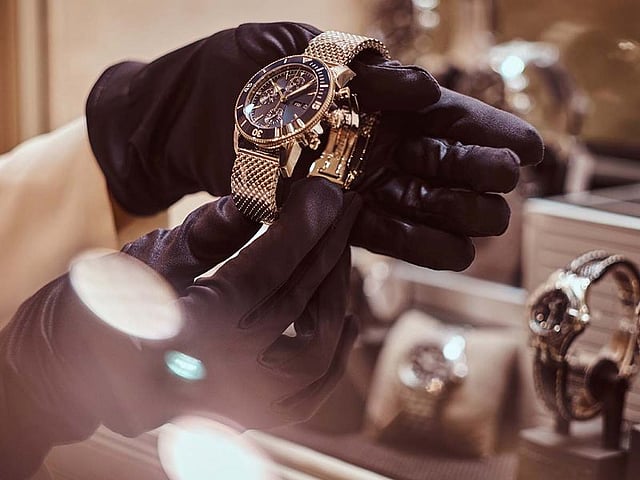
In this context, high-quality luxury watches represent more than craftsmanship—they function as a financial buffer. They are easy to store, insure, and transport, and highly collectible references often provide strong liquidity in the secondary market. For many buyers, they operate as a form of “wearable wealth.”
That said, investors are mindful of cross-border considerations. Should UAE-based Indian residents choose to repatriate watches to India, import duties and tariffs can materially affect returns, underscoring the importance of informed, long-term holding strategies.
Long-Term Performance That Outpaces Alternatives
Luxury watches have quietly built an impressive investment case. Over the past decade, watch values have risen by an average of 125.1%, outperforming other alternative assets such as coins, jewellery, handbags, wine, art, classic cars, and even coloured diamonds.
This performance has caught the attention of wealthy individuals and family offices, many of whom are actively diversifying portfolios away from traditional equities and real estate. At the upper end of the market, rare and historically significant watches have demonstrated remarkable resilience, particularly during periods of economic uncertainty.
South Asian expatriates, in particular, are showing a growing preference for investment-grade timepieces—selecting watches that not only preserve wealth but also have the potential to appreciate steadily over time.
Adding to their intrinsic appeal, many high-end watches are crafted from precious and rare materials. Gold and platinum cases remain staples, while independent brands such as F.P. Journe have elevated the use of unusual, hard-to-machine metals like tantalum, which carry significant standalone material value.
The UAE’s Expanding High-Net-Worth Base
The UAE provides fertile ground for this trend. Indian expatriates alone account for over 4 million residents, with the population growing at approximately 7% annually. According to Knight Frank, the UAE is home to 130,500 dollar millionaires, and while nationality-specific figures are unavailable, it is widely estimated that 20–25% are Indian. Additionally, 10 Indian billionaires currently reside in the Emirates.
This substantial concentration of wealth has had a visible impact on global luxury watch auctions, with UAE-based bidders playing an increasingly influential role in shaping demand, pricing, and rarity premiums.
Generational Wealth and the Auction Effect
The surge in auction activity is also being fueled by a significant transition of wealth. Many South Asian families who settled in the UAE decades ago are now witnessing a generational handover. Their children—often described as third-culture kids—have grown up in cities like Dubai and Abu Dhabi, calling the Emirates home.
According to a co-authored whitepaper by DIFC Innovation Hub, Julius Baer, and Euroclear, more than US$1 trillion in wealth is expected to transfer across families in the Middle East by 2030. Indian millennials and Gen Z heirs are influencing luxury watch auctions in two distinct ways: by selling inherited watches that no longer align with their tastes, and by actively purchasing high-quality timepieces as their own wealth expands.
This dual effect is stimulating both supply and demand, reinforcing auctions as dynamic marketplaces rather than static resale platforms.
Cultural Roots and Modern Icons
Watches also hold deep cultural resonance within Indian history and identity. Since independence, timepieces have reflected shifts in fashion, aspiration, and economic progress. Influential figures have played a pivotal role in shaping this legacy.
Mahatma Gandhi, the political and spiritual leader of India, famously wore a sterling silver Zenith pocket watch, symbolizing simplicity and purpose. In modern times, cultural and celebrity influence has amplified watch desirability. Bollywood icon Shah Rukh Khan sparked global conversation after wearing a rose gold Patek Philippe Grand Complication Minute Repeater Perpetual Calendar to the MET Gala. Among India’s elite, Anant Ambani is known for owning one of the world’s rarest and most complex watches—the Patek Philippe Sky Moon Tourbillon, valued at over $8 million.
In the sporting world, cricket legend Virat Kohli has been widely photographed wearing the Rolex Daytona Rainbow Everose Gold, further cementing luxury watches as cultural and aspirational symbols.
A Wearable Asset for an Uncertain World
Taken together, currency volatility, strong historical returns, demographic wealth growth, and cultural significance explain why luxury watch auctions are gaining traction among UAE residents. For many expatriates—especially Indian buyers—timepieces represent a rare intersection of financial prudence, emotional value, and global liquidity.
In an era where wealth preservation demands creativity, luxury watches are proving that sometimes, the smartest investments are the ones you can wear on your wrist.