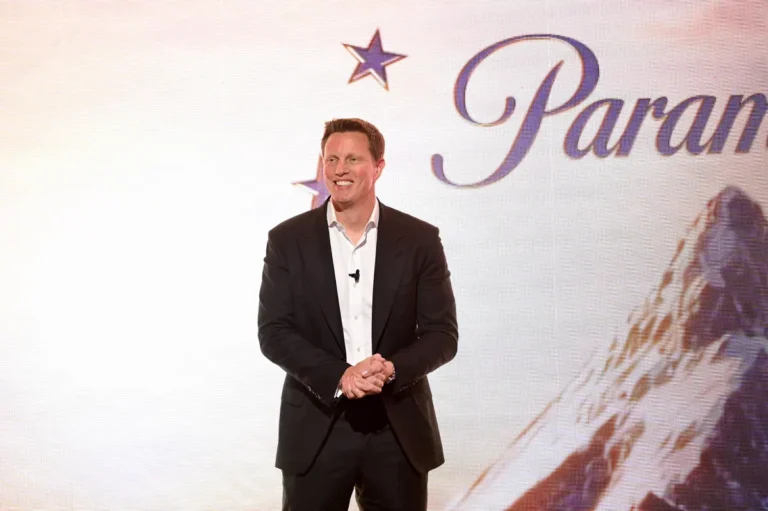
David Ellison is preparing to take on one of the most ambitious challenges in modern media: combining Paramount and Warner Bros. Discovery into a single entertainment powerhouse under the Skydance banner. The scale of the undertaking is immense, with approximately $80 billion in debt and a sprawling portfolio of studios, television networks, and streaming businesses to manage.
Yet even before the new enterprise has a chance to establish itself, critics are questioning whether Ellison can deliver on his ambitions. Some industry observers have suggested that the financial burden could prove overwhelming, potentially forcing the company to sell assets to remain viable.
But such predictions raise a broader question: are these assessments grounded in the realities of the business, or are they shaped by assumptions that have repeatedly underestimated Ellison’s ability to navigate complex negotiations?
A Deal That Defied Expectations
Ellison’s journey toward building a major media conglomerate has been marked by skepticism at nearly every stage. His initial effort to acquire Paramount faced resistance from the Redstone family, whose ownership of the historic entertainment company had long defined its direction.
The challenge grew even more formidable when Warner Bros. Discovery entered the picture. Competition involving major industry players, including streaming giant Netflix, added another layer of complexity to an already high-stakes transaction.
Ellison nevertheless pressed forward, pursuing negotiations with Warner Bros. Discovery leadership and navigating regulatory scrutiny in California. According to the account presented in the original commentary, the eventual resolution of the legal dispute with California Attorney General Rob Bonta helped clear a path toward completing the merger.
For those who had predicted that the transaction would collapse under political, regulatory, or financial pressure, the reported outcome offered a reason to reconsider their assumptions.
The Weight of an $80 Billion Challenge
Despite the significance of the deal, the obstacles ahead are substantial. Combining two major media organizations involves far more than bringing their assets under one corporate umbrella.
The new company must manage debt, streamline operations, reconcile corporate cultures, and determine how its film studios, television networks, and streaming platforms can work together more effectively. It must also compete in an entertainment landscape where audience habits are changing and the economics of traditional television continue to face pressure.
Debt servicing will be particularly important. A large financial burden can restrict investment, reduce flexibility, and leave a company more vulnerable to economic downturns or disappointing business performance.
For Ellison, success will depend on whether the combined company can generate sufficient cash flow, identify sustainable efficiencies, and invest wisely in content that attracts audiences. The merger’s size may create opportunities, but scale alone does not guarantee profitability.
The central challenge is therefore not simply whether Ellison can complete a deal of historic proportions, but whether he can turn that deal into a durable and financially successful business.
Beyond the Stereotype of a Billionaire’s Son
Much of the debate surrounding Ellison has focused on his family background. As the son of Larry Ellison, the billionaire co-founder of Oracle, David has access to substantial financial resources and influential networks. Critics have sometimes framed his ambitions as an extension of his father’s wealth rather than the product of his own experience.
However, Ellison has also developed a track record in film production, with projects associated with major franchises such as Mission: Impossible and Top Gun. These ventures demonstrate experience in a business where commercial success depends on production decisions, audience appeal, distribution strategies, and the ability to manage expensive creative projects.
That background does not automatically establish that he can successfully oversee a diversified media conglomerate. Producing successful films and integrating legacy entertainment businesses require different skills. Nevertheless, dismissing his ambitions solely because of his family connections risks overlooking the professional experience he has accumulated.
The more meaningful test will be his ability to translate that experience into effective corporate leadership.
When Conventional Wisdom Becomes Conventional Bias
The debate over Skydance also highlights a recurring problem in business commentary: the tendency for early assumptions to become established narratives.
Analysts, investors, academics, and journalists play an important role in evaluating major corporate transactions. Their expertise can help identify risks, expose unrealistic financial projections, and clarify the consequences of complex decisions. Yet expertise is not infallible, and confident predictions can become less reliable when they are shaped by incomplete information or entrenched assumptions.
In Ellison’s case, supporters of the deal argue that some observers have been too quick to interpret his ambitions through the lens of privilege, political associations, and doubts about his experience.
The criticism is not necessarily that industry experts lack knowledge, but that professional credentials and access to influential circles do not eliminate the possibility of misjudgment.
The lesson extends beyond entertainment. In financial markets, where billions of dollars can depend on the interpretation of incomplete information, investors must distinguish between evidence-based analysis and commentary driven by established narratives. A prediction deserves scrutiny regardless of whether it comes from a prominent executive, a celebrated academic, or a respected financial institution.
At the same time, a successful negotiation should not be mistaken for proof that every future business decision will succeed. Predictions must ultimately be judged against evidence, not merely against the reputations of those making them.
Political Connections and Corporate Independence
Ellison’s political associations have added another dimension to the discussion. His family’s relationship with President Donald Trump, along with the appointment of journalist Bari Weiss to lead CBS, has attracted attention and intensified debate over the future direction of the combined media enterprise.
These developments have prompted questions about editorial independence, corporate governance, and the relationship between political influence and media ownership.
Such questions deserve careful examination. The ownership structure of a major media organization can affect public confidence, particularly when its outlets cover politically sensitive issues. However, concerns about potential influence should be assessed through concrete decisions, governance arrangements, and editorial practices rather than assumptions based solely on personal relationships.
For the new company, maintaining credibility with audiences, advertisers, journalists, and investors will be an important part of the broader integration challenge.
The Real Test Begins Now
The completion of a major merger marks the beginning of a new phase, not the conclusion of the business challenge. Ellison must now demonstrate that the combined enterprise can operate efficiently, preserve the creative strengths of its studios, compete in a crowded streaming market, and manage its substantial financial obligations.
There is a legitimate case for caution. High debt, organizational complexity, changing consumer behavior, and regulatory scrutiny all create risks that cannot be dismissed simply because earlier predictions proved inaccurate.
But there is also a case for withholding judgment until the business has had a meaningful opportunity to demonstrate its capabilities.
The story of Skydance and Warner Bros. Discovery is therefore about more than one executive’s ambition. It is also a reminder that conventional wisdom can become entrenched long before the evidence is complete—and that neither enthusiastic supporters nor skeptical critics should be treated as infallible.
Ultimately, Ellison’s legacy will not be determined by the predictions he has defied or the size of the empire he has assembled. It will depend on what he builds from it: a sustainable entertainment business capable of balancing financial discipline, creative excellence, and long-term competitiveness.
For now, the skepticism remains, the risks are real, and the stakes are enormous. The decisive chapter is only beginning.