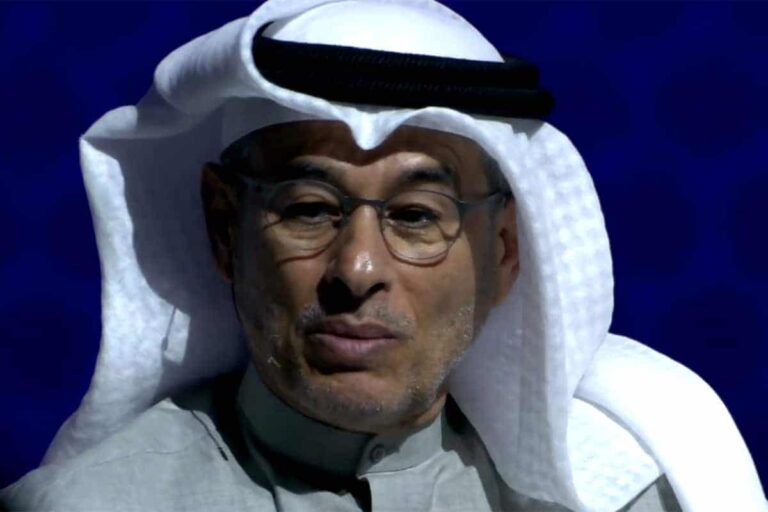
Emaar Properties chairman Mohamed Alabbar has called on businesses to challenge the dominance of global technology giants, arguing that artificial intelligence could reshape the competitive landscape and reduce dependence on established technology providers.
Speaking at the Dubai Fintech Summit, Alabbar criticised the market power of companies such as Microsoft and Oracle, questioning how businesses can negotiate effectively with suppliers that dominate their respective industries.
He also warned that artificial intelligence could become the next major monopoly, with a handful of companies controlling the technologies on which businesses and the global economy increasingly depend.
“I think we should challenge all of them,” Alabbar said when asked whether regional businesses should take on established monopolies.
His comments reflect growing concerns about the concentration of technological power and the need for businesses to maintain greater control over their digital infrastructure.
Building noon: A Case for Competition
Alabbar pointed to his experience building noon, the Middle East e-commerce platform, as an example of how competition can challenge established market leaders.
He said noon was created partly to contribute to the region’s digital economy and ensure that a single company did not dominate the e-commerce experience.
The same philosophy has influenced noon’s expansion into food delivery, where Alabbar said the company sought to address concerns among local restaurants about high commissions charged by existing platforms.
According to Alabbar, some restaurants were facing commissions of approximately 35 per cent. Noon entered the market with a commission rate of 17.5 per cent, which he said was designed to cover operating costs rather than maximise profits.
The company had to invest heavily in technology and logistics to establish its position in the market.
However, Alabbar argued that challenging dominant players was not simply a commercial opportunity but also a responsibility to create a more competitive business environment.
“You have to be honourable,” he said, emphasising the importance of using business influence to challenge monopolistic practices and support industries seeking alternatives.
His experience with noon, he suggested, demonstrates how new entrants can introduce different pricing models and encourage greater competition in markets dominated by established companies.
Big Tech and the Limits of Competition
Alabbar’s criticism of Big Tech was particularly focused on enterprise software, where businesses often depend on a limited number of major providers.
He questioned how much negotiating power customers genuinely possess when dealing with companies such as Microsoft and Oracle, particularly when their products become deeply integrated into everyday business operations.
“We all believe in this business of competition, freedom, all that,” he said. “They sell us all these books, right? It’s a joke.”
His remarks highlight a broader concern among business leaders: technological dependence can limit a company’s ability to negotiate prices, change suppliers or develop alternative systems.
For businesses operating across multiple markets, the challenge is increasingly about maintaining flexibility while relying on technology that supports critical operations.
Alabbar believes artificial intelligence could offer an opportunity to change that relationship.
AI Agents Could Transform Business Operations
Alabbar said his companies were experimenting with AI agents across individual departments, with the possibility of a supervisory agent coordinating their work.
These systems could eventually automate processes that currently rely on traditional enterprise software, corporate communication systems and manual workflows.
He questioned whether some existing business tools would remain necessary as AI becomes more capable of managing information and coordinating tasks.
“Do we need emails anymore? I don’t know,” he said, suggesting that AI agents could eventually read information and distribute communications automatically.
Alabbar also predicted that traditional enterprise resource planning systems could have as little as 12 months left, as artificial intelligence changes how businesses manage their operations.
His prediction reflects an ambitious view of AI’s potential to reshape corporate technology. However, the pace and extent of such changes will depend on how quickly businesses adopt these systems and how effectively they can integrate them into existing operations.
The Risk of a New AI Monopoly
For Alabbar, the challenge is not simply replacing one technology supplier with another. It is ensuring that artificial intelligence does not create a new concentration of technological power.
He welcomed the emergence of competing American and Chinese AI companies, noting that he already uses Alibaba’s AI technology as an alternative to US providers.
He also expressed hope that the UAE and Europe would develop stronger domestic alternatives.
“I hope that we’ll get something out of the UAE,” he said.
His comments underline the importance of developing regional AI capabilities at a time when businesses are becoming increasingly dependent on advanced technologies for everything from customer service to financial processes.
The companies controlling the underlying AI infrastructure could have significant influence over operating costs, productivity and the competitive position of businesses worldwide.
For the UAE, developing domestic AI alternatives could help strengthen technological independence while supporting the country’s broader ambitions to become a global technology and innovation hub.
A Call for Businesses to Challenge the Status Quo
Alabbar’s message to business leaders was clear: technological dependence should not be accepted as inevitable.
His experience with noon illustrates how challenging established market leaders can create opportunities for new businesses, improve pricing structures and encourage innovation.
He believes artificial intelligence could now provide another opportunity to challenge traditional technology providers and rethink how businesses operate.
However, he also cautioned against allowing the next generation of technology to become dominated by a small number of companies.
As AI continues to transform industries, the question facing businesses is not simply which technology they should adopt, but whether they will have meaningful choices over the systems that increasingly define their operations.
For Alabbar, competition remains essential to ensuring that technological progress benefits businesses and markets rather than concentrating power in the hands of a few dominant players.