Dubai has tested an innovative airport processing system that could significantly reduce the time passengers spend preparing for flights, cutting the overall journey from at least 120 minutes to approximately 45 minutes.
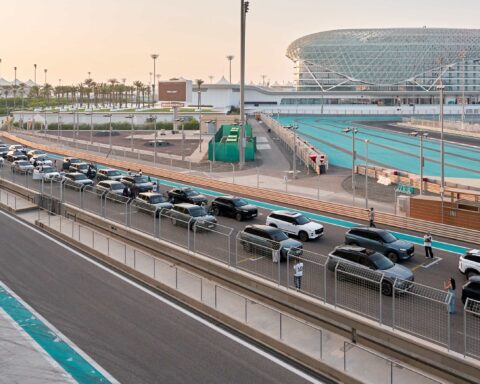
The City Terminal pilot, presented by Dubai Aviation Engineering Projects (DAEP), allows passengers to complete key airport procedures at a facility within the city before travelling directly to the airport concourse in secure vehicles.
The trial achieved an estimated 60% reduction in overall passenger journey time, highlighting a potential new approach to airport operations as Dubai continues to expand its aviation infrastructure.
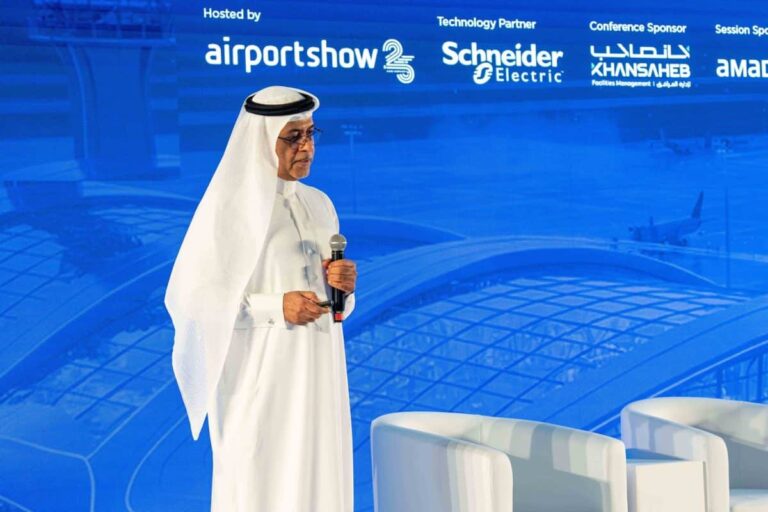
The findings were presented at the 13th Global Airport Leaders’ Forum, held alongside the 25th Airport Show at Dubai World Trade Centre.
How Dubai’s City Terminal System Works
Unlike conventional city check-in facilities, which generally allow passengers to check in and hand over baggage before arriving at the airport, Dubai’s City Terminal concept extends the process to include security screening and passport control.
According to Abdullah Al Shamsi, Senior Manager of Future of Things at DAEP, the pilot explored how these procedures could be completed outside the traditional airport terminal.
The process involved four main stages:
- Check-in: Passengers completed their flight check-in at a city-based facility.
- Baggage drop-off: Travellers handed over their luggage before leaving for the airport.
- Security and passport control: Passengers completed screening and immigration procedures before reaching the main airport.
- Secure airport transfer: Travellers were transported directly to the airport concourse in secure vehicles.
By relocating these steps, the system aims to reduce the number of procedures passengers need to complete after arriving at the airport.
Al Shamsi said the trial demonstrated how airport processes could be redesigned rather than simply improved through incremental technological upgrades.
However, officials have not yet announced a launch date for a regular passenger service, confirmed facility locations or identified participating airlines.
Dubai’s Aviation Expansion Creates Opportunity for Innovation
The City Terminal trial comes as Dubai advances its long-term aviation plans, including the development of Al Maktoum International Airport.
The planned expansion provides an opportunity to rethink passenger services, airport infrastructure and operational processes from the outset.
Rather than adding technology to existing systems, the approach seeks to integrate digital tools, infrastructure and passenger services into a more connected travel experience.
Al Shamsi outlined a broader vision for airport innovation by 2032, incorporating artificial intelligence, digital identity, biometric technology and real-time data analytics.
These technologies could help airports anticipate congestion, allocate resources more efficiently and provide passengers with personalised information and assistance.
The approach also recognises that different travellers have different requirements, including business passengers, families with children, transit travellers and People of Determination.
“Our ambition is not to build an airport with more technology, but an airport that becomes better because of technology,” Al Shamsi said.
Dubai Airports Highlights Resilience and Collaboration
Majed Al Joker, Chief Operating Officer of Dubai Airports, identified collaboration, operational resilience and innovation as key priorities for the future of aviation.
He emphasised that passengers experience their journeys as a continuous process, making coordination between airports, airlines, regulators and other stakeholders essential to improving service standards.
Operational resilience is another priority, particularly as airports prepare for disruptions and changing passenger demand.
Al Joker also highlighted the continued importance of airport employees, noting that workforce skills and effective decision-making remain central to delivering reliable services alongside technological investment.
The message is that technology alone cannot transform airport operations. Its benefits depend on how effectively it is integrated into daily processes and supported by trained personnel.
Dubai South Targets Flexible Airport Infrastructure
Eng. Khalifa Al Zaffin, Executive Chairman of Dubai Aviation City Corporation and Dubai South, said Dubai’s ambition to develop the world’s largest airport involves more than increasing physical size and passenger capacity.
He highlighted the importance of flexible infrastructure capable of accommodating emerging technologies and adapting to changing aviation requirements.
This approach could help ensure that future airport facilities remain capable of supporting new passenger-processing systems, digital services and operational models.
Khalid Ibrahim Saif, Director of Aviation Economics and Growth at the Dubai Civil Aviation Authority, also emphasised closer coordination between airports, airlines and regulators to support sustainable growth and operational resilience.
Could Dubai’s City Terminal Change the Airport Experience?
The pilot offers an early example of how Dubai could reshape the passenger journey as it develops its next generation of aviation infrastructure.
Reducing the process from at least two hours to approximately 45 minutes could make travel more convenient while helping airports rethink how they manage passenger flows.
However, the reported results relate to the pilot, and it remains unclear how the system would perform at scale, how passengers and baggage would be coordinated across participating airlines, or what operational and regulatory requirements would apply to a permanent service.
If implemented more widely, the City Terminal concept could become part of Dubai’s broader effort to combine advanced technology, improved passenger services and more efficient airport operations.