Egypt Considers Military Support for Saudi Arabia
Egypt has signalled its readiness to support Saudi Arabia in protecting its national security as attacks by Yemen’s Iran-aligned Houthi movement intensify. President Abdel Fattah al-Sisi has requested an urgent parliamentary session to seek authorisation for Egypt’s armed forces to assist the kingdom if Riyadh formally requests military support.
According to a statement from the Egyptian presidency, Cairo is prepared to provide the necessary assistance to defend Saudi Arabia’s security, territorial integrity and critical resources.
A parliamentary vote had initially been expected on Sunday, but discussions were due to continue on Monday, according to lawmakers and local media reports. The proposed authorisation could represent a significant development in Egypt’s regional security policy, although it does not itself confirm that Egyptian forces will be deployed.
Houthi Attacks Raise Regional Security Concerns
The potential Egyptian involvement comes amid renewed fighting between the Saudi-led coalition supporting Yemen’s internationally recognised government and the Houthis, who control the capital, Sanaa, and substantial areas of northern Yemen.
Recent Houthi attacks have reportedly targeted Saudi Arabia, including Riyadh’s international airport and facilities associated with state-owned oil giant Saudi Aramco. The escalation has raised concerns about the security of critical infrastructure and the possibility of further disruption to regional energy supplies.
The fighting has also heightened concerns over the Bab al-Mandab Strait, a strategic maritime passage connecting the Red Sea with the Gulf of Aden. The route is important for international trade and energy shipments, making any sustained disruption a potential threat to global shipping.
The renewed hostilities are unfolding amid a wider regional conflict involving the United States, Israel and Iran, increasing the risk that fighting in Yemen could become more closely connected to broader Middle Eastern tensions.
Cairo Reaffirms Its Commitment to Riyadh
Egyptian officials have emphasised the importance of coordination with Saudi Arabia as regional tensions grow.
Foreign Minister Badr Abdelatty said he discussed regional developments and the need for de-escalation during a telephone conversation with Saudi Foreign Minister Prince Faisal bin Farhan.
The Egyptian presidency also said Cairo would provide Saudi Arabia with all necessary and possible forms of support to protect its security, resources, territorial integrity and Islamic holy sites.
The statement followed a meeting of Egypt’s National Defence Council chaired by Sisi and attended by senior government and military officials.
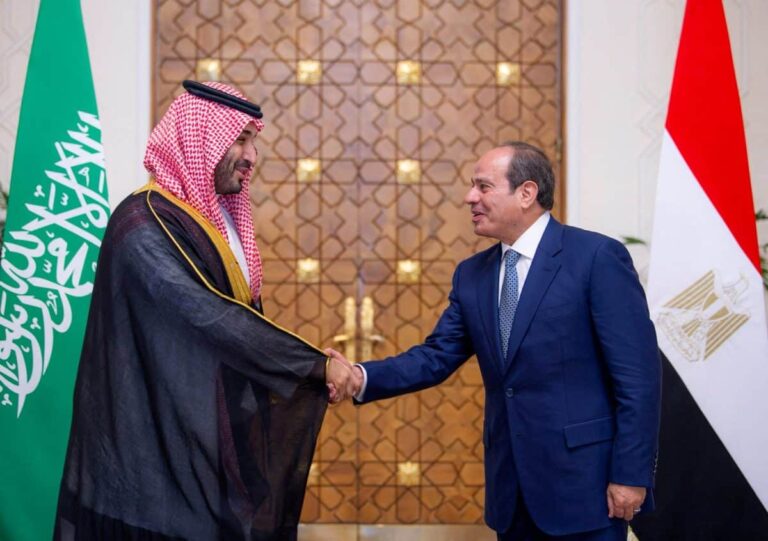
Sisi has also indicated that Egypt would act in coordination with Saudi leadership, including King Salman and Crown Prince Mohammed bin Salman. The two countries maintain close political, security and economic ties, making cooperation a significant factor in their response to regional instability.
Why Egyptian Military Involvement Could Matter
Egypt possesses one of the Arab world’s largest militaries and has previously participated in the Saudi-led coalition that intervened in Yemen in 2015 to support the internationally recognised government against the Houthis.
However, Egypt played a relatively limited combat role during that campaign. A more direct military contribution now could expose Egyptian forces and interests to retaliation from Houthi fighters, whose missile and drone capabilities have threatened targets across the region.
Egypt has already faced security concerns linked to the wider conflict. A drone attack struck the Mediterranean port of Damietta in July, although no group claimed responsibility and Egyptian authorities did not publicly attribute the incident to a particular party.
Any decision to deploy forces would therefore involve balancing support for a strategic ally against the risks of becoming more directly involved in a widening regional confrontation.
Saudi Arabia Strengthens Regional Partnerships
Saudi Arabia has been seeking greater coordination with regional partners as it confronts growing security threats. According to the supplied report, Riyadh also approached Pakistan and sought assistance from US President Donald Trump over the Houthi threat. Washington reportedly offered intelligence-sharing and targeting assistance rather than agreeing to the requested strikes.
Saudi Defence Minister Prince Khalid bin Salman also visited Abu Dhabi on Sunday for talks with UAE President Mohammed bin Zayed Al Nahyan, with discussions focused on regional security.
The meeting comes amid efforts by Saudi Arabia and the United Arab Emirates to manage tensions in their relationship and strengthen regional coordination. Both countries have faced security challenges linked to attacks by Iran and allied armed groups during the wider conflict.
Economic and Energy Implications
The escalation carries potential consequences beyond the immediate battlefield. Saudi Arabia is a major global oil producer, while the Bab al-Mandab Strait is an important corridor for international shipping.
Further attacks on oil infrastructure or maritime traffic could increase shipping costs, disrupt supply chains and add pressure to global energy markets. The broader conflict has already heightened concerns about energy security and the vulnerability of key transport routes.
Egypt’s possible involvement would add another major regional military power to an already complex security environment. However, the extent of any Egyptian contribution will depend on parliamentary authorisation, Saudi Arabia’s requests and subsequent decisions by Cairo.
For now, Egypt’s announcement signals a willingness to support Riyadh, while the prospect of direct military involvement underscores the growing regional implications of the escalating conflict in Yemen.